
8 min read
How Often Should You Flush Your Hot Water Tank in BC?
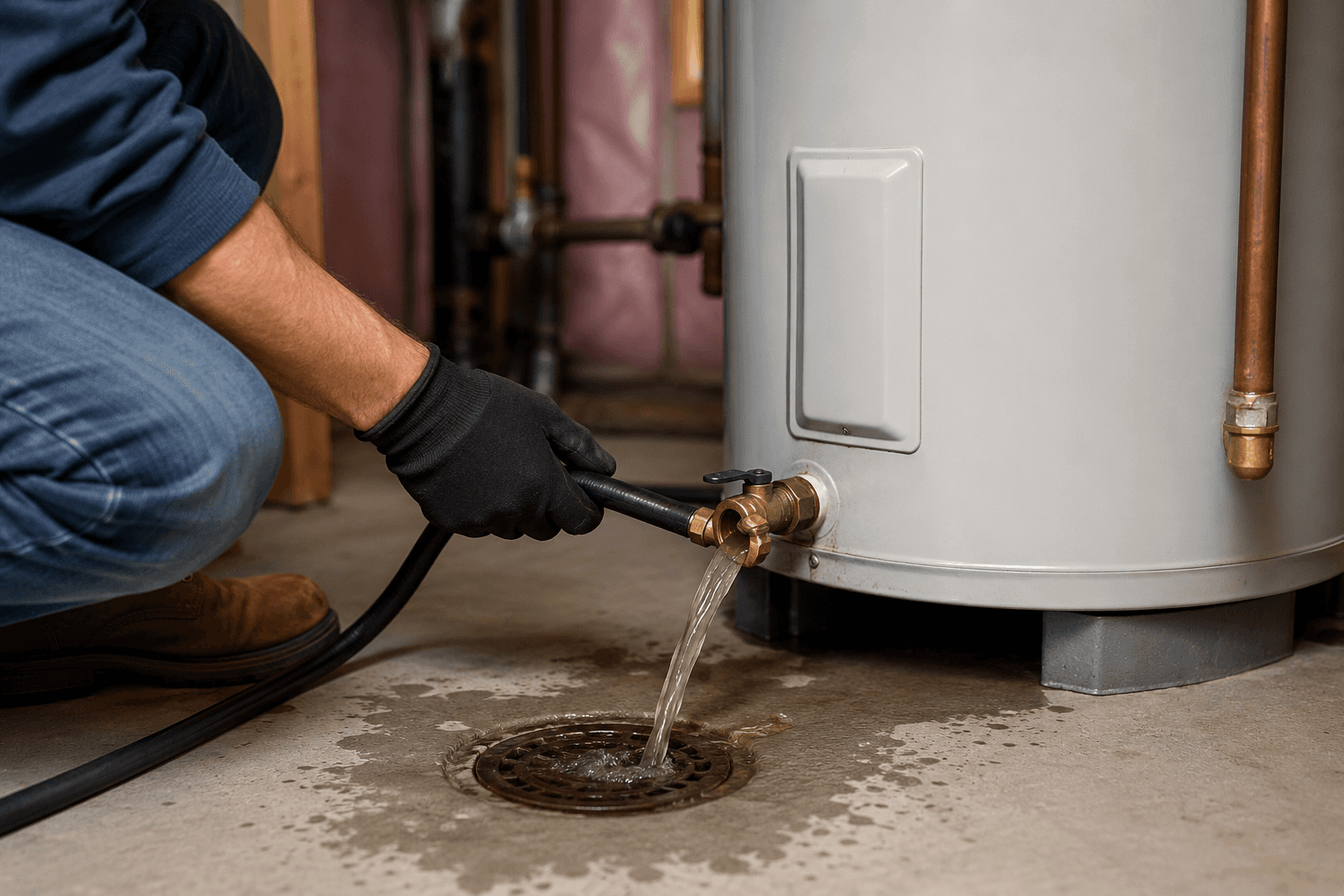
Most homeowners never think about their hot water tank until it stops working properly. But one simple maintenance task, flushing the tank, can add years to its life and keep your water heating efficiently. The trouble is, the right answer depends on where in BC you live, because water hardness varies a lot from one municipality to the next.
Here's what flushing actually does, how often you need to do it, and how to tell if your tank is overdue.
What Does Flushing a Hot Water Tank Actually Do?
Every time your tank heats water, small amounts of sediment, minerals like calcium and magnesium, and debris settle at the bottom. Over time, this sediment builds into a layer that affects your tank in a few ways.
It insulates the bottom of the tank from the burner or heating element, forcing the system to work harder and longer to heat the same amount of water. It reduces your tank's effective capacity, since sediment takes up space water would otherwise occupy. It also creates the conditions for corrosion, which is one of the most common reasons tanks fail early.
Flushing drains the tank fully, clearing out this buildup so the unit can run the way it was designed to.
How Often Should You Flush It in BC?
The general industry recommendation is once a year for most households. But BC isn't uniform when it comes to water hardness, and that matters more than people realize.
Softer water areas (most of Metro Vancouver, Burnaby, parts of Vancouver, Richmond, New Westminster): Once a year is usually sufficient. Municipal water in these areas tends to be relatively soft, so sediment builds up more slowly.
Moderate hardness areas (Surrey, Delta, Coquitlam, Port Coquitlam, Port Moody, White Rock): Stick to the annual schedule, but pay closer attention to early warning signs, since hardness can vary block to block depending on the water source.
Harder water and well water areas (Langley, Maple Ridge, Mission, Abbotsford, Pitt Meadows, and rural properties on private wells): Twice a year is a safer interval. Well water in particular often carries higher mineral content and more sediment than municipal supply, so tanks in these areas accumulate buildup faster.
If you're unsure what your local water hardness looks like, your municipality's annual water quality report usually lists it, or a plumber can test it on site during a service visit.
Signs Your Tank Is Overdue for a Flush
You don't always need to wait for the calendar. A few signs point to sediment buildup before it becomes a bigger problem.
Banging, rumbling, or popping noises coming from the tank are one of the clearest signs. This happens when water gets trapped under hardened sediment and boils against the tank wall. Reduced hot water capacity, where you run out of hot water faster than you used to, often means sediment has taken up usable tank space. Rusty or discoloured water from the hot tap can indicate corrosion starting at the bottom of the tank. Longer wait times for hot water to reach the tap, or inconsistent water temperature, are also common with a sediment-heavy tank.
If you notice any of these, it's worth having a plumber take a look rather than waiting for the next scheduled flush.
Tankless Owners Aren't Off the Hook
If you have a tankless water heater, you don't deal with sediment buildup the same way, but you do need annual descaling to remove mineral scale from the heat exchanger. The maintenance task is different, but the underlying issue, hard water affecting your system over time, is the same. If you're weighing tank versus tankless for your next replacement, we covered the full comparison in Tankless vs. Tank Water Heater: What Makes Sense for a BC Home?
Can You Flush a Tank Yourself?
Technically, yes, and plenty of guides walk through the process. In practice, a few things make professional flushing worth considering. Valves on older tanks can seize or break during a DIY flush, turning a routine task into an unplanned repair. A full flush is also a good opportunity to inspect the anode rod, check pressure relief valve function, and look for early signs of tank corrosion, things most homeowners aren't equipped to assess. For tanks that haven't been flushed in several years, sediment can be heavily compacted, and an improper flush can stir it up without fully clearing it out.
If your tank is part of routine plumbing maintenance, having a licensed technician handle it ensures it's done correctly and gives you a chance to catch small issues before they become expensive ones.
Frequently Asked Questions
What happens if I never flush my hot water tank? Sediment continues to build, reducing efficiency and capacity over time. Eventually, this leads to higher energy bills, popping or rumbling noises, and a shortened tank lifespan. Severe buildup can also damage the heating element or burner.
Does flushing void my warranty if I skip it? Many manufacturers require documented annual maintenance to keep a warranty valid. Check your tank's warranty terms, since skipping flushes can sometimes affect coverage if a claim is filed later.
Is well water harder on a hot water tank than city water? Generally, yes. Well water common in rural parts of Langley, Maple Ridge, and Mission tends to carry more sediment and mineral content than treated municipal water, which means more frequent flushing is usually recommended.
How long does a hot water tank flush take? A professional flush typically takes 30 to 60 minutes, depending on the tank's condition and how much sediment has built up.
Can a dirty tank cause my hot water to run out faster? Yes. Sediment buildup reduces usable tank capacity and forces the system to work harder, both of which can shorten how long your hot water lasts.
Keep Your Hot Water System Running the Way It Should
A yearly flush is one of the simplest ways to protect your water heater and avoid an unexpected failure. If it's been a while since yours was serviced, or you're not sure what your local water hardness means for your maintenance schedule, we're happy to take a look.
Ark Plumbing and Heating services tank and tankless water heaters across the Lower Mainland and Fraser Valley, including Langley, Surrey, Maple Ridge, Abbotsford, and Mission.
Request a free quote or call 604-441-3411.
Article details
Date
Author
Noah Debebe