
8 min read
When Was Poly-B Used in BC?
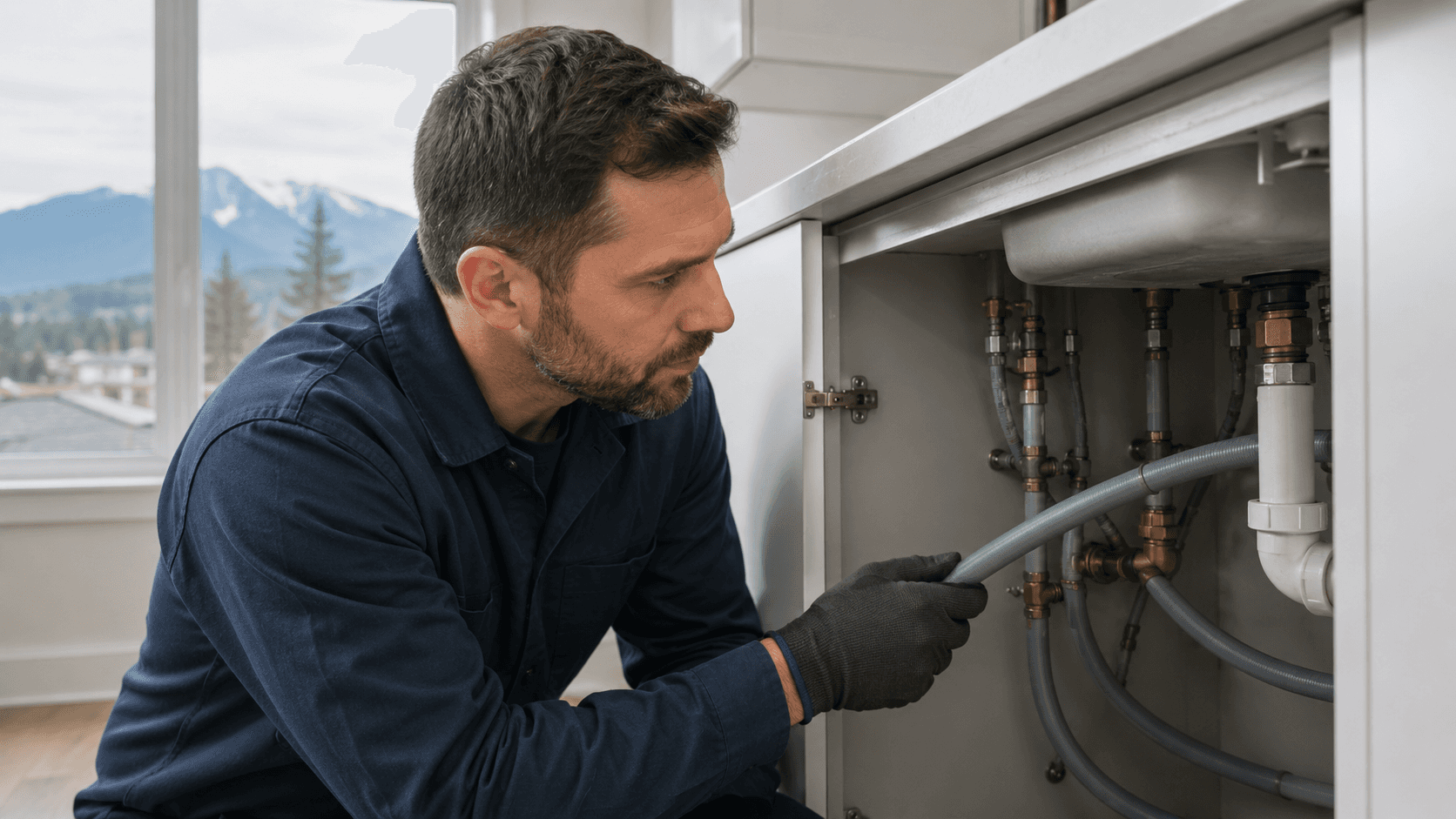
If you are trying to figure out whether your home has Poly-B, the year it was built is the fastest clue you have. Poly-B was not used forever, and it was not used in every era of BC construction. There is a fairly specific window, and knowing it tells you a lot before a plumber ever looks under your sink.
Here is the short version: in BC, Poly-B was commonly installed in homes built between roughly 1978 and 1995. If your home went up in that span, it is worth checking. If it was built well before or well after, the odds drop sharply.
Below is the fuller story, why that window exists, where in BC Poly-B shows up most, and how to tell if your home is one of them.
The Poly-B Window: Roughly 1978 to 1995
Poly-B, short for polybutylene, arrived in Canadian residential construction around 1978 as a cheaper, easier-to-install alternative to copper. It is a flexible grey (sometimes blue-grey) plastic supply pipe, and for about a decade and a half it was everywhere. Builders liked it because it was inexpensive and quick to run.
It was installed in hundreds of thousands of Canadian homes through the late 1980s and into the early-to-mid 1990s. That is the core window: a home built between 1978 and 1995 in BC has a meaningful chance of containing Poly-B in its water supply lines.
Why It Disappeared
The decline was not sudden, it was a slow loss of confidence over about a decade.
By the mid-1980s, insurers and tradespeople were noticing a pattern of leaks in homes plumbed with Poly-B. The material degrades from the inside out when exposed to chlorinated municipal water, and the damage produces no warning on the outside of the pipe until it fails. Confidence eroded as the failures added up.
By around 1995, most tradespeople in BC had stopped using the material in new residential construction. It was formally pushed out of the codes shortly after: Poly-B was removed from the National Plumbing Code in the late 1990s, and in 2005 it was officially struck from the list of acceptable piping materials in Canada. That is why, in practice, homes built after the mid-1990s rarely contain it.
So the window has a clear reason behind it. Poly-B was code-acceptable and popular through the late 70s, 80s, and early 90s, then fell out of use as its failure pattern became impossible to ignore.
One Important Exception: Renovations
The build year is a strong signal, but it is not the whole story. A home built outside the 1978 to 1995 window can still contain Poly-B if it was renovated or had plumbing work done during those years. If a 1960s home had a bathroom added or its supply lines redone in 1988, Poly-B could easily be in those sections.
The reverse is also true. A home built in the Poly-B era may have already been repiped by a previous owner. The only way to be sure either way is to look.
Where in BC Poly-B Shows Up Most
Poly-B turns up wherever residential construction was heavy through the 1980s and early-to-mid 1990s. Across BC that includes large pockets of homes, and sometimes entire neighbourhoods, in fast-growing communities of that era. Metro Vancouver and the surrounding Lower Mainland saw extensive Poly-B installation during this period, which is why so many homeowners across the region run into it today.
If your home falls in the build window, the location does not make you safe or unsafe on its own. It just means you are in good company, plenty of BC homes are in exactly the same situation.
How to Tell If Your Home Has Poly-B
You can do a first pass yourself in a few minutes. Look for flexible grey or blue-grey plastic pipe, usually stamped with the marking "PB2110." Check the spots where supply pipe is visible:
Under kitchen and bathroom sinks
Near or behind the water heater
Around the water meter or main shutoff
In the basement, crawlspace, or any mechanical room
A few cautions. Poly-B can look similar to PEX, the modern flexible pipe used to replace it, so the marking matters more than the colour. And a lot of the pipe in your home runs hidden inside walls and ceilings, so a clear basement does not guarantee a clear house. If you find Poly-B in the visible spots, assume more is hidden.
A licensed plumber can confirm what you actually have and how much of it, which is the only way to know for certain.
What It Means If You Find It
Finding Poly-B is not an emergency, but it is something to plan around rather than ignore. The pipe degrades with age and chlorinated water, and when it fails it tends to fail suddenly. On top of the leak risk, many BC insurers now treat active Poly-B as a liability, which can mean higher premiums, reduced coverage, or trouble at renewal.
If you want to understand how long the pipe in your home is likely to hold up, we cover that here: How Long Do Poly-B Pipes Last? And if you are weighing replacement and want to know what it costs, we broke that down here: How Much Does a Poly-B Repipe Cost in BC?
Not Sure What You Have? Let Us Confirm It
Ark Plumbing & Heating assesses and replaces Poly-B for homeowners across the Lower Mainland. If your home was built between 1978 and 1995, or renovated in that window, we will confirm whether you have Poly-B, show you where it is, and explain your options in plain language with no pressure.
Learn more about our Poly-B repipe service, or call us directly at 604-441-3411 to book an assessment.
We serve homeowners across the region, including:
Article details
Date
Author
Noah Debebe