8 min read
Does Your Surrey BC Home Have Poly-B Pipes? Here's How to Find Out
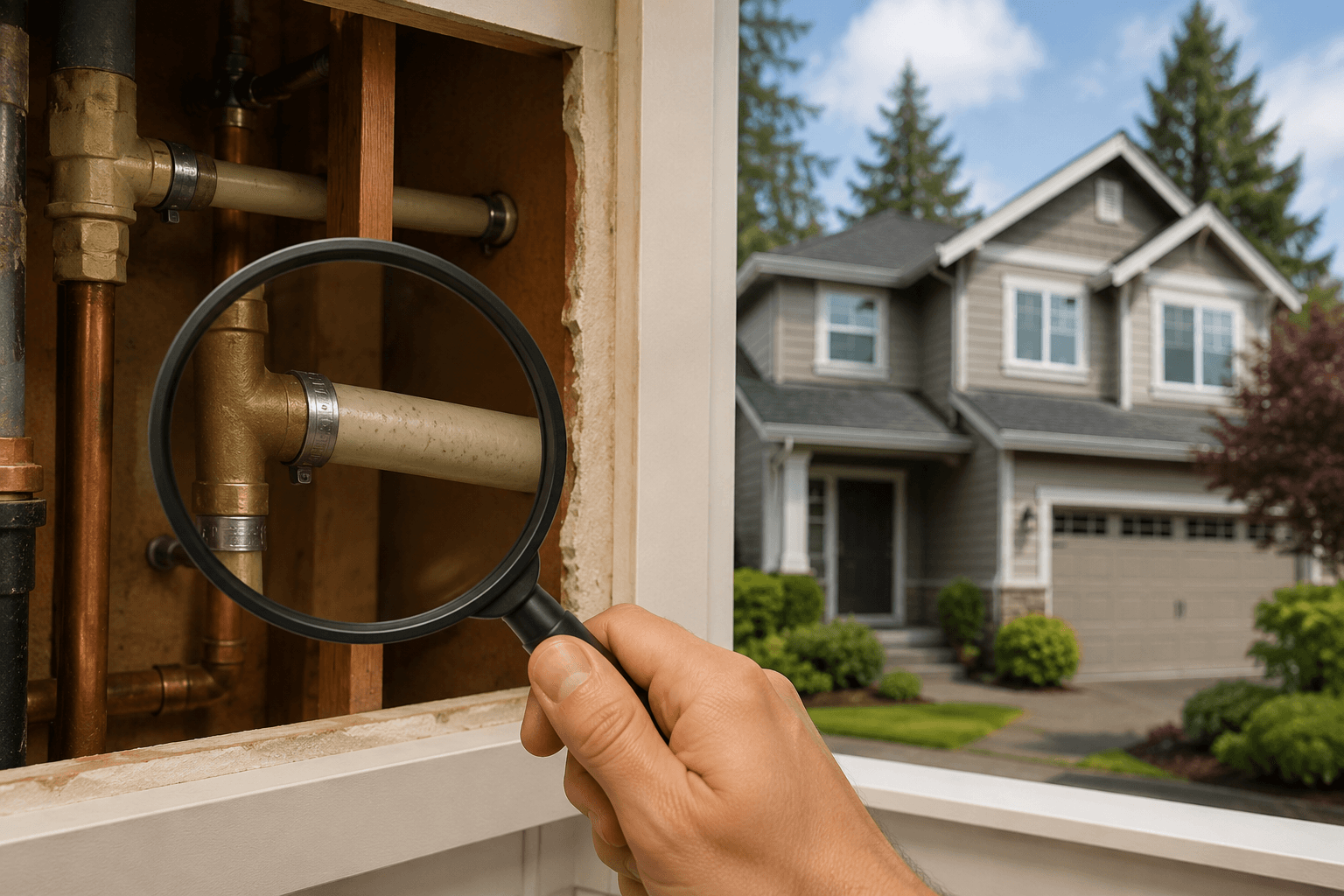
Thousands of homes across Surrey were built with Poly B (polybutylene) piping, a grey plastic water supply pipe that was widely used in Canadian residential construction from the late 1970s through the mid-1990s. Today, Poly B is recognized as one of the most problematic plumbing materials ever installed in BC homes, with a well-documented history of cracking, leaking, and failing without warning. If you own a Surrey home built during this era and you're not sure what type of piping you have, finding out should be a priority. Here's how to check, what to look for, and what to do if you discover Poly B in your home.
Why Surrey Has So Many Homes With Poly B
Surrey experienced massive residential growth during the 1980s and early 1990s. Neighbourhoods like Newton, Fleetwood, Guildford, and parts of Whalley were rapidly developed to accommodate families moving south of the Fraser River, and builders needed materials that were fast and affordable to install at scale. Poly B fit the bill perfectly. It was cheaper than copper, lighter, easier to work with, and approved under the building codes of the time.
The result is that a significant concentration of Surrey's housing stock, particularly single-family homes, townhomes, and low-rise buildings constructed between 1978 and 1995, contains Poly B as the primary water supply piping. An estimated 200,000 or more homes across British Columbia still have Poly B systems, and Surrey accounts for one of the largest shares of that total. To understand more about when and why this material was so widely used, read our guide on when Poly B was used in BC.
How to Check for Poly B in Your Surrey Home
The good news is that identifying Poly B doesn't require tearing open your walls. In most homes, you can confirm its presence with a quick visual check in a few key areas.
Check near your hot water tank. This is usually the easiest place to spot Poly B. Look at the pipes connecting to and running from your water heater. If you see grey plastic pipe, typically half an inch to one inch in diameter, you're almost certainly looking at Poly B.
Look under your kitchen and bathroom sinks. Open the cabinet doors and look at the supply lines running up to the faucet connections. In homes with Poly B, you'll often see the grey pipe running through the wall or floor and connecting to the fixture with a plastic or brass compression fitting.
Check behind your toilets. The supply line running from the wall to the base of your toilet is another common spot where Poly B is visible. Look for the same grey plastic pipe coming out of the wall.
Inspect your mechanical or utility room. If your home has an unfinished mechanical room, laundry room, or utility area, you may be able to see exposed pipe runs along the walls or ceiling. This can give you a broader view of how extensively Poly B was used throughout the home.
Look in your crawl space or unfinished basement. If accessible, crawl spaces and unfinished basement areas often expose long runs of supply piping that make identification straightforward.
What Does Poly B Look Like?
Poly B is a flexible, grey plastic pipe. It is important not to confuse it with other types of plastic piping that may be present in your home.
Poly B is grey in colour, flexible, and usually stamped with "PB" or "PB2110" along the side of the pipe. It was used for hot and cold water supply lines.
PEX is a cross-linked polyethylene pipe that comes in red (hot), blue (cold), or white. PEX is the modern replacement for Poly B and is not a concern.
ABS is a rigid black plastic pipe used for drain, waste, and vent lines, not water supply. This is not Poly B.
CPVC is a rigid, cream or light yellow plastic pipe sometimes used for hot water supply. This is also not Poly B.
If the pipe is grey, flexible, and connected to your water supply system, it is very likely Poly B. If you're unsure, a licensed plumber can confirm in minutes during a quick inspection.
What If You Find Poly B?
If your visual check confirms grey plastic piping in your Surrey home, don't panic, but don't ignore it either. Here's what you should know.
Your pipes may not be leaking right now, but they are aging. Poly B deteriorates from the inside out due to a chemical reaction between the pipe material and chlorine in municipal water. By the time a leak becomes visible, the internal degradation has usually been developing for years. Homes in Surrey with Poly B systems that are now 30 to 40 years old are well inside the window where failures become increasingly likely.
Check your insurance policy. Many insurance providers in BC are tightening their stance on homes with Poly B plumbing. Some have begun raising premiums, adding water damage exclusions, or declining to renew coverage for properties that still have Poly B in place. Contact your insurer to understand how your Poly B status affects your coverage before a problem occurs.
Get a professional assessment. A licensed plumber can inspect your entire system, assess the condition of your Poly B piping and fittings, and give you an honest picture of where things stand. This is especially important if your home has a mix of original Poly B and sections that were partially updated over the years, as the transition points between old and new materials are often where failures occur.
Plan for replacement. Replacing Poly B piping before it fails is almost always less expensive and less disruptive than dealing with the aftermath of a burst pipe. A planned repipe allows you to control the timing, budget appropriately, and avoid the emergency scenario that leads to water damage, mould, and insurance claims. To get a sense of what's involved financially, check out our breakdown of how much a Poly B repipe costs in BC.
Which Surrey Neighbourhoods Are Most Affected?
While Poly B can be found across all of Surrey, certain neighbourhoods have a higher concentration due to the timing of their development.
Newton is one of Surrey's largest and most diverse neighbourhoods, with substantial housing growth during the 1980s that coincided directly with the peak Poly B era. A high proportion of single-family homes in Newton still contain original Poly B systems.
Fleetwood is a family-oriented community where most homes were built from the 1970s through the 1990s. Poly B replacement and furnace upgrades are among the most frequent service calls in this neighbourhood.
Guildford is an established residential area with well-maintained homes, many of which still have original supply lines from the 1980s and early 1990s.
Whalley and City Centre feature a mix of older single-family homes from the 1950s through the 1990s alongside newer high-rise developments. Homes built during the Poly B era in this area are common.
Bear Creek, Panorama Ridge, and Sullivan also contain pockets of housing from the 1980s and early 1990s where Poly B was standard.
If your Surrey home is in any of these neighbourhoods and was built between 1978 and 1995, a Poly B check should be on your to-do list.
What Does Poly B Replacement Involve?
A full Poly B pipe replacement in Surrey involves removing all Poly B supply piping from your home and replacing it with modern PEX or copper lines. The process typically includes an initial inspection to confirm the full extent of Poly B in your home, a detailed quote with transparent pricing, removal of the old piping and installation of new supply lines throughout the home, reconnection of all fixtures and appliances, pressure testing and code inspection, and drywall patching and cleanup to restore your home.
Most Surrey repipes are completed within a few days depending on the size and layout of the home. A qualified plumber will plan the work to minimize disruption to your daily routine and protect your finishes throughout the process.
Don't Wait for a Leak to Find Out
The most expensive way to discover you have Poly B is when a pipe bursts behind your wall at 2 a.m. on a rainy January night. Water damage, mould remediation, insurance claims, and temporary housing costs add up fast and far exceed the cost of a planned repipe. A five-minute visual check today can tell you whether your home is at risk, and a professional assessment can give you a clear path forward.
Ark Plumbing & Heating has helped hundreds of Surrey homeowners identify and replace Poly B piping before it becomes a crisis. Our licensed plumbers provide free Poly B assessments, upfront pricing, and quality workmanship on every repipe. Contact us today for a free assessment or call 604-441-3411 to speak with our team.
Article details
Date
Author
Noah Debebe